Winter prep around here usually means tires, furnace filter and gutters. The electrical side gets skipped until something goes wrong in January, which is the worst possible month to be figuring it out. Here's what's worth doing, roughly in order.
Space heaters are the main event
Almost every winter call we get traces back to a space heater. A typical one pulls about 1,500 watts, which is 12.5 amps. A 15-amp circuit has 12 amps of continuous capacity. So one heater on an older shared circuit is already at or past the limit before the lamp and the TV.
What to do: don't run a heater on a power strip or an extension cord, ever. Put it on a circuit that isn't doing anything else. If the room you need heat in doesn't have one, a dedicated 20-amp circuit is a straightforward job and it is dramatically cheaper than a fire.
And if a heater makes the breaker trip, that breaker is doing what it should. Don't go up a size.
If you're on a well, plan for the pump
In town an outage is an inconvenience. Out toward Bonner, Clinton, up the Blackfoot or out past Frenchtown, an outage means no water, and in a cold snap it can mean pipes. A wind event takes those lines down most winters.
Two options:
- Inlet and transfer switch for a portable generator. The affordable path. You wheel the generator out, plug into an exterior inlet, flip the switch, and run the well, the furnace and the fridge.
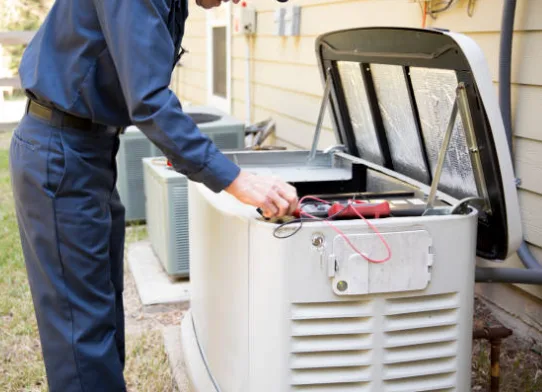
- Standby unit. More money, starts itself, you don't have to be home.
Either way the transfer switch is the part that matters. It keeps your generator from back-feeding the utility line, which can kill the crew working to restore your power. Please don't use a double-male cord into a dryer outlet. People do it, it's illegal, and it is genuinely dangerous to somebody else.
Surge protection
Winter storms bring surges, and so does power coming back after an outage. A whole-home surge protector at the panel runs a couple hundred dollars installed. The control board in a modern furnace runs quite a bit more than that, and it's the thing you least want to lose in February.
Outside stuff, while it's still warm
- Check that exterior outlets still have intact in-use covers. Cracked ones let in snowmelt.
- Test the GFCIs outside and in the garage. Press test, press reset. If it won't reset, it needs replacing.
- Look at the service mast and the drop where it comes to the house. If it's loose, pulling away, or has a tree limb resting on it, deal with it before there's ice on it.
- Get driveway and back-step lighting working now. Doing it in December in the dark is miserable.
The timing
September and October. Once the first hard cold hits, everybody calls the same week, and a generator hookup that would have been a quick job in the fall turns into waiting in line. We'd rather schedule you in October than apologize in January.
Call (406) 313-6180 if you want someone to walk the house with you before it gets cold.